Parallax Advanced Research Awarded $6.1 million Vigilant Spirit Control Station®
On September 30, 2024, Parallax Advanced Research announced a significant achievement: securing a $6.1 million AFRL-funded award to help build, test, and operate mobile and fixed systems that advance Beyond Visual Line of Sight (BVLOS) flight operations and strengthen infrastructure for Advanced Air Mobility (AAM) and Uncrewed Aerial Systems (UAS) integration. As part of this effort, the Vigilant Spirit Control Station® (VSCS) is integrated into the operational framework to provide operators with surveillance, communications, and vehicle control. Originally developed by AFRL and Parallax, VSCS is a modern UAS operator control interface with an extensible plug-in architecture and is owned by AFRL.
Project Timeline
September 30, 2024
Contract award by AFRL advances Beyond Visual Line of Sight (BVLOS) flight operations and strengthens infrastructure for Advanced Air Mobility (AAM) and Uncrewed Aerial Systems (UAS) integration, generating real-world safety data from planned operations to support commercial market development while integrating the Vigilant Spirit Control Station® (VSCS) to provide operators with surveillance, communications, and vehicle control.
November 1, 2024
Public announcement of the contract award.
Ongoing
Research and development phases in progress...Need more information.
Our Impact
- VSCS turns each operator into a force multiplier by enabling scalable, multi-vehicle human-machine teaming—reducing training burden and improving mission flexibility through a common, extensible control-station interface.
- It supports safer, more scalable operations in increasingly complex low-altitude airspace by integrating airspace-awareness tooling (including ADS-B ingestion) and strengthening operator deconfliction workflows.
- It provides a practical foundation for AAM ecosystem growth by enabling “one-to-many” oversight concepts that can extend from defense use to broader civil aviation management as flight volume and autonomy increase.
Core Capabilities
- One-to-many human-machine teaming: one operator can supervise and control multiple UAS within a single interface to increase mission throughput and reduce manpower load.
- Non-proprietary, extensible architecture: plugin-based design enables cross-platform integration and rapid incorporation of new payloads, services, and autonomy functions.
- Cross-platform coverage: supports Groups 1–5 vehicle classes and is structured to scale across domains (air/land/maritime) as required by mission needs.
- Integrated simulation and training: provides operator training and R&D experimentation capabilities within the control-station ecosystem.
- Airspace awareness inputs: supports integration of operational safety data feeds such as Automatic Dependent Surveillance–Broadcast (ADS-B) for civil/military deconfliction in complex airspace.
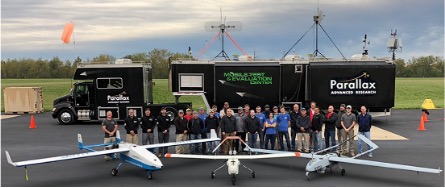
- Mobile test and evaluation readiness: integrates with the Mobile Test and Evaluation Center (MTEC) concept to support deployable operations, testing, and training where infrastructure is limited..
Key Contributors
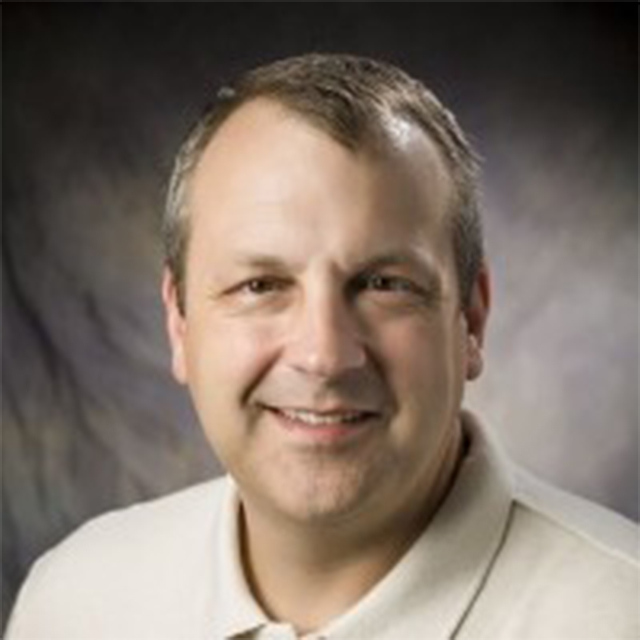
Dr. Dave Gross
Dr. David Gross is the Director of Unmanned Systems Research for Parallax Advanced Research where he manages multiple programs focusing on flight operations, systems integration, test, and evaluation of autonomous systems. Dr. Gross has 35 years of engineering and program management experience across government, industry, and academia where he has managed more than 25 R&D programs in sensors, autonomy, and UAS flight testing valued at $43M.
Since 2005, Dr. Gross has been the Air Force Research Laboratory / Aerospace Systems Directorate (AFRL/RQ) Principal Investigator for the Intelligent Control and Evaluation of Teams (ICE-T) program developing and demonstrating distributed cooperative control algorithms for multi-UAS operations. During this same time, he has worked with multiple AFRL/Airman Systems (RH) programs demonstrating supervisory control of heterogeneous UAS via the Vigilant Spirit Control Station (VSCS). In 2018, the OSD Rapid Innovation Fund project Heterogeneous-UAS Integration for a single-operator VSCS Environment (HIVE), demonstrated single operator simultaneous control of three Group 3 UAS (Shadow, TigerShark, and Bat-4) in an operationally relevant scenario. Vigilant Spirit is currently being transitioned for the AFSOC RPA Control Suite (ARCS).
Dr. Gross is an AFRL-certified mission operator for Piccolo- and Kestrel-based UAS and a certified instructor for Piccolo Command Center. He has accumulated over 500 operating hours for Group 1-3 UAS from 73 flight tests at 16 different test ranges. Dr. Gross is experienced in preparing flight test plans, interfacing with Safety Review Boards, Technical Review Boards, and managing all aspects of the flight test process, including integrating autonomy algorithms, onboard processors, communication equipment, networking, ground stations, and autopilots.
Prior to his current position at Parallax, Dr. Gross spent 11 years with the Wright State Research Institute (WSRI) in the same capacity as at Parallax. Dr. Gross was a Chief Engineer for the General Dynamics Advanced Information Systems for 12 years and an Aerospace Engineer for the National Air and Space Intelligence Center (NASIC) for nine years.
Dr. Gross has published 30 conference papers and two journal articles. His work with the ICE-T program earned a 2008 Air Force Outstanding Scientist Team Award and the 2007 AFRL Aerospace System Directorate Director's Award.
While at WSRI, Dr. Gross also served as a control systems adjunct professor in the Wright State University Electrical Engineering department teaching numerous undergraduate and graduate level classes in Automatic Control Theory.
Dr. Gross received his Ph.D.in Engineering from the University of Dayton in 1997 researching intelligent control systems. Dr. Gross received his M.S. from the University of Dayton in 1992, and his B.S. in Aerospace Engineering from Ohio State University in 1988.
Greg Feitshans
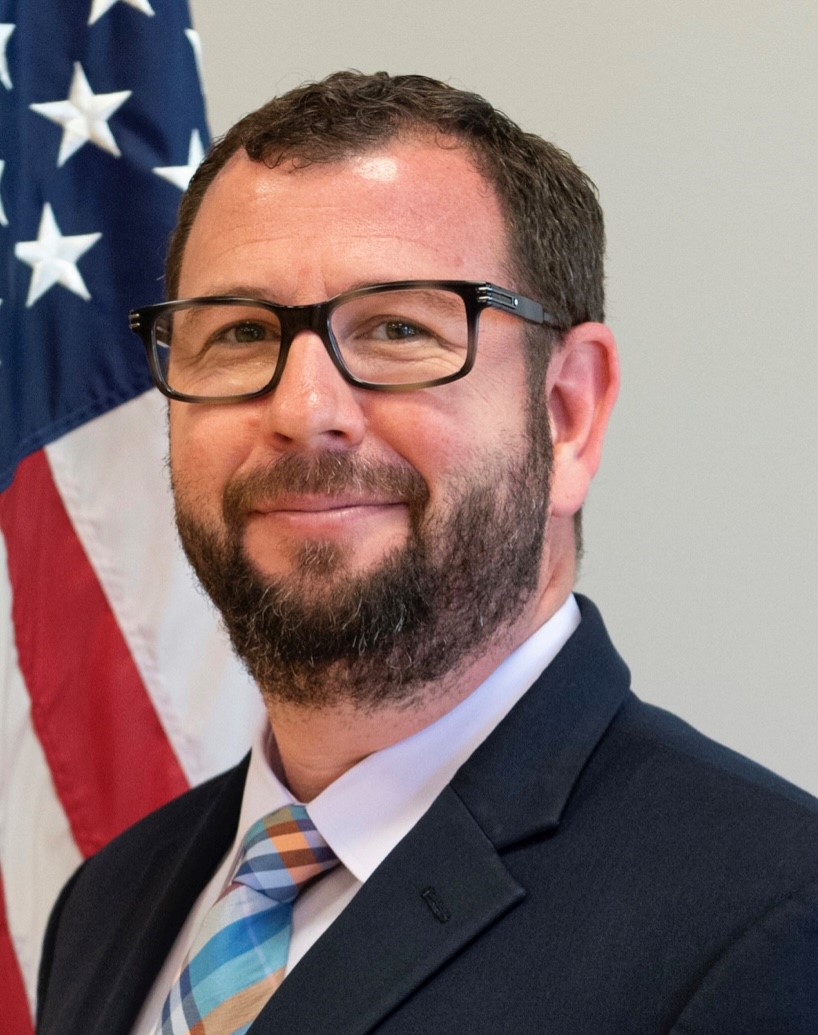
Scott McAffry
Scott McAffry has over a decade of hands-on manufacturing experience spanning the shop floor, machinist roles, and corporate leadership, he brings a grounded, operational perspective to complex program and business challenges. Building on this foundation, Scott spent 15 years managing high-priority Department of Defense programs within the U.S. Air Force branch, including KC-46, Large Aircraft Infrared Counter Measures (LAIRCM), B-21, Next Generation Air Dominance (NGAD), and Skyborg. This experience sharpened his ability to lead multidisciplinary teams, manage risk, and drive innovation in highly regulated, mission-critical environments.
Complementing his technical and programmatic expertise, Scott also brings one year of sales experience and three years of contracts administration, adding a strong commercial and compliance lens to his leadership profile. Scott's academic background includes a Bachelor of Science in Mechanical Engineering Technology and a Master of Business Administration (MBA), equipping him with both the analytical rigor and business acumen to navigate between engineering depth and strategic decision-making.
The true strength of his career lies in the integration of these diverse domains—manufacturing, defense program management, sales, and contracts. Together, they provide a rare and powerful combination of technical fluency, operational insight, regulatory awareness, and business strategy. This convergence enables Scott to lead with a holistic, systems-level approach—connecting the dots between product development, stakeholder alignment, execution excellence, and value creation. In today’s increasingly complex and interconnected environment, this blend of experience is not only valuable—it’s essential for delivering outcomes that are both innovative and resilient